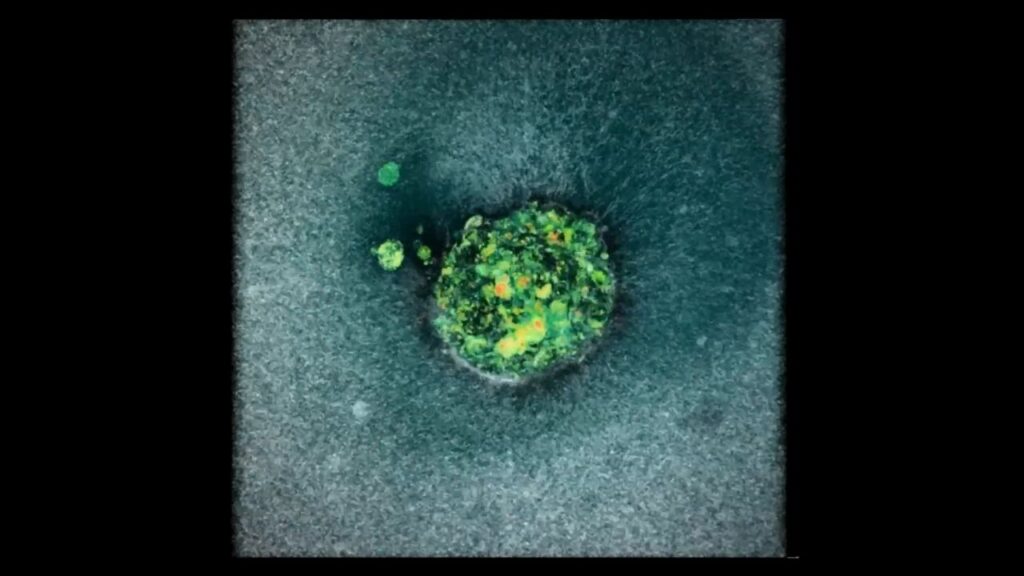
For the first time in history, scientists have captured real-time 3D footage of a human embryo implanting in the uterus. This milestone has been described as a quantum leap in reproductive medicine, giving researchers an unprecedented look at the very beginning of human life. The findings could transform how we understand pregnancy, infertility, and miscarriage, offering new hope to millions of families worldwide.
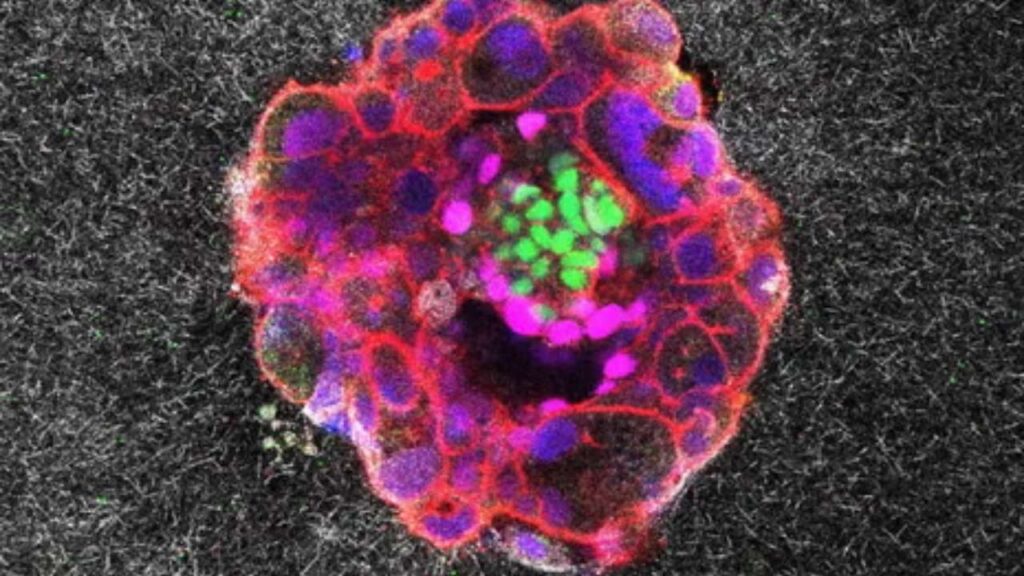
Unlike previous theories based on indirect evidence, this footage directly shows how a human embryo actively burrows into the uterine lining using a combination of enzymes and mechanical pulling forces. The breakthrough was made possible by advanced lab techniques and high-resolution microscopy, opening the door to improvements in IVF success rates and fertility treatments.
Table of Contents
First-Ever Footage Shows Human Embryo Implanting in the Uterus
| Aspect | Details |
|---|---|
| Breakthrough | First-ever 3D live footage of a human embryo implanting in a uterus-like environment |
| Where | Institute for Bioengineering of Catalonia (IBEC) & Dexeus University Hospital, Barcelona |
| How | Embryos placed in a lab-created synthetic uterine lining and observed with fluorescence microscopy |
| Key Finding | Human embryos use both enzymes and physical traction forces to burrow into tissue |
| Comparison | Mouse embryos mostly stay on the surface, unlike humans that invade deeply |
| Impact | Could improve IVF success, reduce miscarriages, and deepen knowledge of fertility |
| Official Source | Institute for Bioengineering of Catalonia (IBEC) |
The first-ever footage of a human embryo implanting in the uterus is more than just a scientific curiosity—it’s a revolution in reproductive medicine. By watching this critical moment unfold in real time, researchers have unlocked insights that could reduce miscarriages, improve IVF success, and bring new hope to families worldwide.
As science continues to peel back the mysteries of life’s beginnings, this discovery stands as a reminder of how much we still have to learn—and how much possibility lies ahead.
Why This Discovery Matters
Every pregnancy begins with a single, delicate step—implantation. This is when a fertilized egg, now a developing embryo, attaches itself to the uterus. But it’s also the most fragile stage of human reproduction. Research shows that up to 60% of miscarriages happen because implantation fails or is incomplete.
Until now, scientists had never actually watched how this process works in humans. Most knowledge came from studying animals like mice or through indirect medical observations. But this new footage, captured in August 2025, gives science a front-row seat to nature’s most secret moment.
For fertility specialists, IVF clinics, and couples struggling to conceive, this insight could be game-changing. Understanding the exact mechanics of implantation may help doctors identify which embryos are most viable and how to prepare the uterus for greater chances of success.
How Scientists Filmed Human Embryo Implantation
Step 1: Creating a Synthetic Uterus
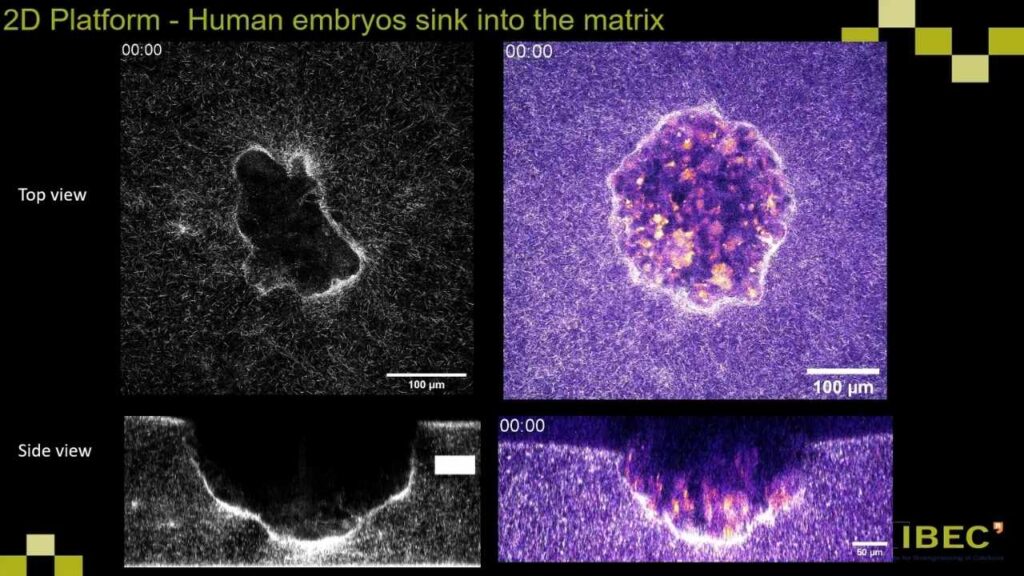
Researchers couldn’t film this inside a real human uterus for ethical and medical reasons. Instead, they built a synthetic uterine lining using collagen and proteins that mimic natural human tissue. This environment allowed embryos donated through IVF programs to interact as they would in real life.
Step 2: Advanced Microscopy
They used real-time 3D fluorescence microscopy—an imaging technique that lights up cells and tracks their movements with extreme precision. This revealed not just where the embryo attached, but how it actively burrowed into the tissue.
Step 3: Recording the Invasion
The footage showed something astonishing: the embryo doesn’t just sit passively. Instead, it pulls, pushes, and breaks down tissue to make space for itself. By generating tiny mechanical forces, the embryo essentially remodels the uterine lining, embedding itself securely.
What Makes Humans Different From Mice
For decades, scientists assumed mice embryos behaved like human ones. But this study proved otherwise.
- Mouse embryos mostly stay on the surface of the uterine lining, forming shallow attachments.
- Human embryos, by contrast, actively dig deep inside the uterine tissue, creating a more secure bond.
This distinction matters because much of fertility research has relied on animal models, which don’t fully represent human biology. Now, researchers can focus on uniquely human mechanisms, leading to better-tailored fertility treatments.
Implications for Fertility and IVF
This discovery has practical benefits for fertility care:
- Improved IVF Success Rates – Doctors could select embryos that show stronger implantation behaviors.
- Reducing Miscarriages – Understanding why some embryos fail to implant may help prevent early pregnancy losses.
- Personalized Fertility Treatments – By studying implantation, clinics can better prepare uterine conditions for each patient.
- Safer Embryo Research – The synthetic uterus model allows scientists to run controlled studies without risking human pregnancies.
For couples undergoing IVF, this could mean fewer cycles, lower costs, and a higher chance of success.
A Step-by-Step Guide: How Implantation Works
Here’s a simplified breakdown of how implantation happens:
Step 1: Embryo Travels to the Uterus
After fertilization in the fallopian tube, the embryo (a blastocyst by day 5) travels down into the uterus.
Step 2: Positioning
The embryo searches for the right spot in the uterine lining, guided by chemical signals.
Step 3: Attachment
Using specialized cells, the embryo makes the first contact with the uterine surface.
Step 4: Invasion
Here’s where the new footage is groundbreaking. The embryo releases enzymes to dissolve tissue and generates traction forces to pull itself deeper.
Step 5: Embedding
The embryo burrows securely inside, allowing the placenta to begin forming and nourishing growth.
This “dance” between embryo and uterus is what determines whether a pregnancy begins successfully.
Practical Advice for Those Trying to Conceive
While this breakthrough is still new, here are some practical takeaways for patients and families:
- Lifestyle Matters: A healthy uterus improves implantation chances. Avoid smoking, manage stress, and eat a balanced diet.
- Seek Expert Care: If you’ve had repeated IVF failures or miscarriages, ask your fertility specialist whether new implantation-focused techniques are available.
Vaping Warning: Scientists Find Chemical That Actively Destroys Human Tissue
FAQs About First-Ever Footage Shows Human Embryo Implanting in the Uterus
1. Is this footage from a real uterus?
No. The embryos were placed in a synthetic uterine lining created in the lab. This allows close observation without ethical risks.
2. Why is implantation so important?
Implantation is the gateway to pregnancy. Without it, even healthy embryos cannot develop.
3. Could this help with IVF treatment now?
Not immediately, but it lays the foundation for new tools that may help doctors improve implantation rates in the near future.
4. Does this change how miscarriages are understood?
Yes. Since about 60% of miscarriages happen due to failed implantation, this research may lead to early interventions.